
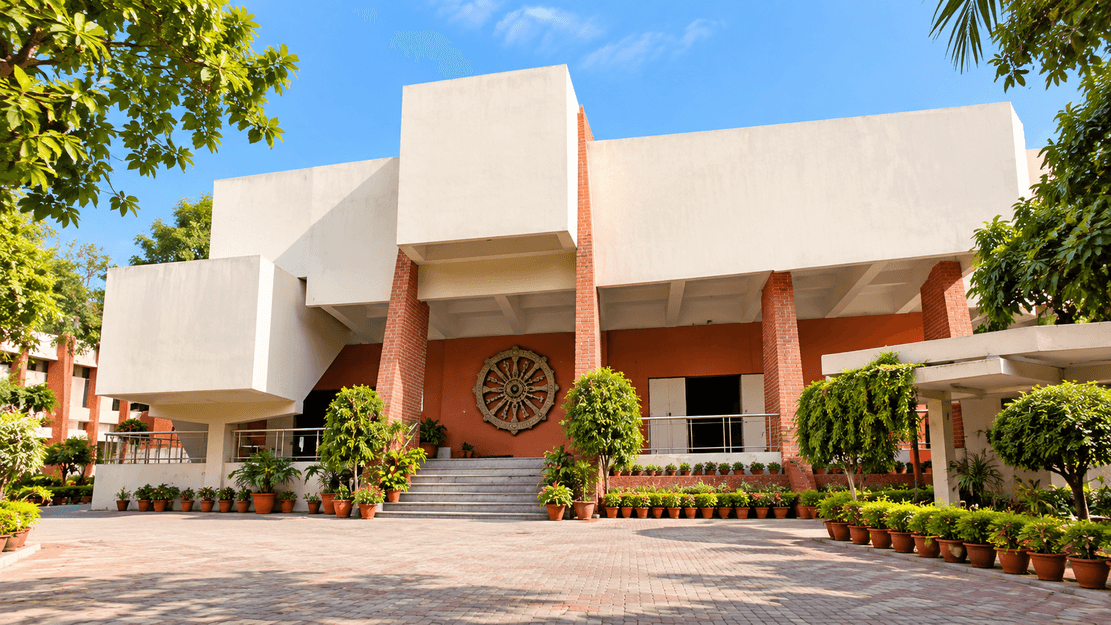
Many parents in central Delhi look for a school that is academically strong and also keeps children rooted in Indian culture. Sardar Patel Vidyalaya (SPV) at Lodi Estate aims to do both. It avoids the gloss of international franchising and focuses on independent, culturally aware and socially responsible citizens. This guide covers the school's identity, language policy, campus, admissions and 2026-27 fees.
About SPV
SPV was established in 1958 by the Gujarat Education Society to meet the varied educational needs of the newly independent capital. It is named after Sardar Vallabhbhai Patel, the "Iron Man of India", and draws on his ideals of national integration and democratic freedom.
The school runs on a democratic model. A Governing Body of elected representatives oversees it, with President Smt. Shveta Kalyanwala, Vice-President Smt. Vibha Parthasarathi and Principal Smt. Anuradha Joshi. The aim is excellence without cut-throat competition, with the focus on pastoral care and each student's potential. See the About Us & Management page.
A Multilingual, Hindi-First Approach
SPV's language policy is what most clearly sets it apart from other CBSE schools in Delhi. Instead of English-medium teaching from the toddler years, it builds a foundation in Hindi.
Pre-School to Class V: Hindi
Hindi is the main medium of instruction. The school's view is that children grasp early concepts best in their mother tongue or national language, which gives them cultural grounding and conceptual clarity.
From Class VI: English
English becomes the main medium in middle school. Because the early years stressed understanding rather than rote translation, the school says its students show a strong command of both English and Hindi.
The four-language formula (Classes VI to VIII)
| Stage | Main medium | Other languages |
|---|---|---|
| Pre-School to Class V | Hindi | English (taught as a subject) |
| Classes VI to VIII | English | Hindi, Sanskrit and one regional language: Gujarati, Tamil, Bengali or Urdu |
| Class IX onwards | English | Hindi |
Academics and Alumni
SPV follows the CBSE curriculum but teaches it in its own way.
The "Home Room" system
Instead of rigid classroom hierarchies, SPV uses the Home Room (HRT) concept for dedicated pastoral care and strong student-teacher relationships. Teachers work in a democratic setup and are encouraged to go beyond the textbook and link lessons to real-life situations.
Notable alumni
- Arts and cinema: Nandita Das, Swara Bhasker and Richa Chadha. Nandita Das recently returned as Chief Guest for the 150th birth anniversary of Sardar Patel.
- Law: Supreme Court advocates Karuna Nundy and Parag Tripathi.
- Business: S. Ramadorai, former Vice-Chairman of Tata Consultancy Services.
- Athletics: Tejaswin Shankar, Asian Games silver medallist and national high jump record holder.
Campus, Sustainability and School Life
The Lodi Estate campus is green and calm in the middle of a busy city. The school credits its pleasant surroundings, garden and sense of order for a good learning atmosphere.
Biophilic design award
On 15 February 2025, SPV won Best Biophilic Design among senior secondary schools for improving indoor air quality. The award was presented at the Indoor Air Pollution Conclave at IIT Delhi. See the News & Activities page.
Facilities
Details are on the School Facilities page.
- Labs: Physics, Biology and Math labs, plus a Computer-Aided (CA) instruction programme.
- Creative spaces: rooms for Art & Craft, Clay Modelling, Woodwork and Theatre in Education.
- Sports: training for Sports Weeks and regional competitions. Naitik Kumar recently won double gold at state-level events.
Co-curricular life and governance
- Festivals: Saanjhi, the cultural festival of folk music, art and storytelling; Rasa, the food festival with dozens of stalls run by students and parents; and the Rangoli exhibition with work by over 500 pupils.
- Activity Week: a multi-day theme-based project week each winter. A recent theme was "Bridges".
- Living Together Camps (LTC): outdoor camps that teach self-reliance and care for the environment.
- Student Executive: a democratic system with manifesto readings, ballot-paper voting and General Secretary elections.
Admissions
Seats are very competitive. The school says its process is transparent, with no management quotas, and that it offers no freeships or scholarships, so fees are the same for everyone.
Pre-School / Nursery
SPV follows the Directorate of Education (DoE) guidelines.
- Online application during the winter window set by the DoE.
- Points and shortlisting based on a standard points system that gives heavy weight to neighbourhood, siblings and alumni status.
- Draw of lots to select among shortlisted children who tie on points.
- Final list published on the school website.
Bookmark the Pre-School / Nursery Admission page for announcements.
Class IX and XI
Higher-class admissions depend on seat availability. Class IX openings are announced from time to time on the online portal. For Class XI, outside candidates register online, and shortlisted applicants are invited for an interaction before a provisional list is published. For questions, write to admission.query@spvdelhi.org.
Fees, 2026-27
Fees are paid in four quarterly instalments, due on 7 April, 7 July, 7 October and 7 January.
One-time admission charges: admission fee Rs. 200, caution money Rs. 500, PTA subscription Rs. 100 and student insurance Rs. 75.
| Class | Total annual fee | Key components |
|---|---|---|
| Pre-School and Class I | Rs. 2,34,740 | Tuition Rs. 1,13,400; mid-day meal Rs. 12,045; annual charges Rs. 41,400; bus Rs. 42,000; development fee Rs. 10,680; ERP Rs. 1,200 |
| Classes II to VIII | Rs. 2,09,555 | Tuition Rs. 1,13,400; annual charges Rs. 41,400; bus Rs. 42,000; development fee Rs. 10,680; ERP Rs. 1,200 |
| Class IX | Rs. 2,28,755 | Tuition Rs. 1,13,400; annual charges Rs. 48,600; special subject fee Rs. 12,000; bus Rs. 42,000 |
| Class XI | Rs. 2,35,955 | Tuition Rs. 1,13,400; annual charges Rs. 48,600; special subject fee Rs. 12,000; Science/CS fees Rs. 7,200; bus Rs. 42,000 |
The totals include the optional but widely used school bus fee of Rs. 42,000 a year. They also include some charges not listed in the "key components" column.
The PTA
SPV sees education as a triangle of student, teacher and parent. The Parent-Teacher Association helps with community initiatives and policy, and runs events such as the Rasa food festival.
Frequently Asked Questions
What is the medium of instruction?
Hindi from Pre-School to Class V, to build a strong language and cultural base. English from Class VI onwards for the main subjects.
Which regional languages are taught in middle school?
Under the four-language formula, Classes VI to VIII study English, Hindi, Sanskrit and one regional language, chosen from Gujarati, Tamil, Bengali or Urdu.
How do I apply for Nursery?
Apply online on the school's portal in the DoE window (usually December-January). Selection is by points (neighbourhood, sibling, alumni), then a draw of lots for tied children.
Does SPV offer scholarships or freeships?
No. By the school's policy, it offers neither.
Are transport and meals provided?
Yes. The bus service costs Rs. 42,000 a year. A mid-day meal for Pre-School and Class I costs Rs. 12,045 a year.
Our Verdict
| Strengths | Consider |
|---|---|
|
|
SPV suits parents who value character, civic responsibility and cultural pride as much as academics. For visits and questions, use the Contact Us page.
Admission rules, dates and fees change every year. Please confirm them on the school's official website before applying.